

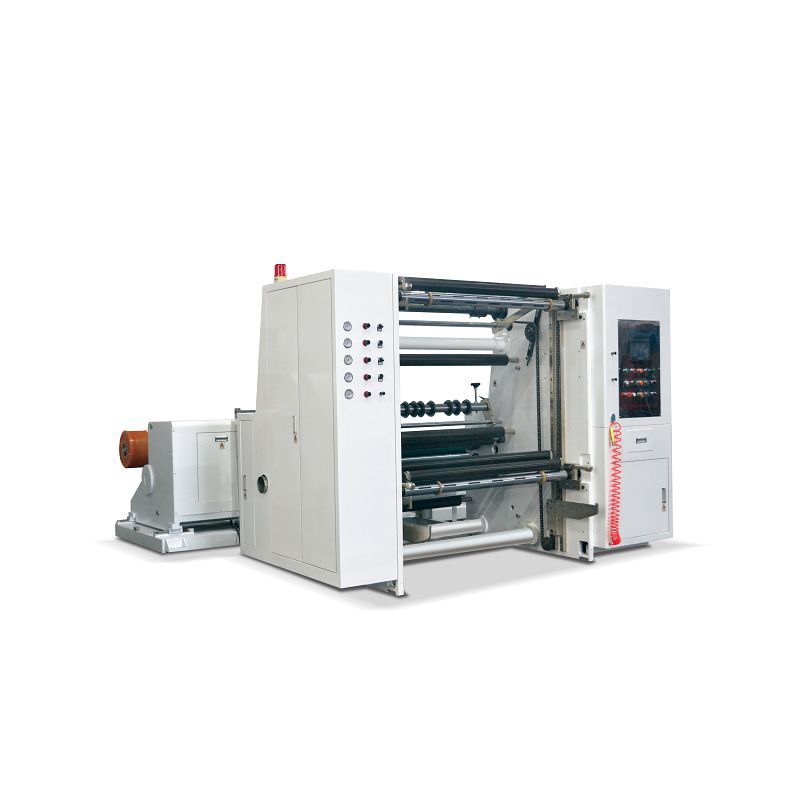
In the realm of converting industries, slitter rewinder machines play a pivotal role in transforming large rolls of materials into smaller, more manageable ones. As a leading supplier of Slitter Rewinder Machine, I often encounter inquiries regarding the differences between single-shaft and double-shaft slitter rewinder machines. This blog aims to shed light on these distinctions, helping you make an informed decision when selecting the most suitable machine for your production needs.
1. Basic Structure and Working Principle
Single - Shaft Slitter Rewinder Machine
A single-shaft slitter rewinder machine, as the name implies, features a single rewinding shaft. The working principle is relatively straightforward. The large parent roll is loaded onto the unwind stand, and the material is fed through a slitting section where it is cut into multiple narrower strips. These strips are then wound onto the single rewinding shaft. This type of machine is commonly used for applications where the production volume is relatively low or where the materials being processed do not require high - speed or complex winding operations.
The simplicity of its structure makes it easy to operate and maintain. It is also more cost - effective in terms of initial investment, which is an attractive feature for small - to - medium - sized enterprises or those just starting in the converting business.
Double - Shaft Slitter Rewinder Machine
In contrast, a double - shaft slitter rewinder machine is equipped with two rewinding shafts. This design allows for continuous operation. While one shaft is actively winding the slit materials, the other can be prepared for the next winding cycle. Once the winding on the first shaft is completed, the machine can quickly switch to the second shaft without significant downtime.
The double - shaft configuration is based on a more complex mechanical and control system. It enables higher production speeds and greater efficiency, especially when dealing with large - scale production requirements. The ability to alternate between two shafts also reduces the time spent on loading and unloading finished rolls, further enhancing productivity.
2. Production Efficiency
Single - Shaft Machines
Single - shaft slitter rewinder machines have limitations in terms of production efficiency. After each winding cycle is completed, the operator needs to stop the machine to remove the finished roll and prepare the shaft for the next cycle. This downtime can accumulate, especially in high - volume production scenarios, resulting in lower overall output.
The speed of a single - shaft machine is also generally lower compared to its double - shaft counterpart. The single - shaft design restricts the rate at which materials can be wound, as the machine has to balance the winding tension and speed to ensure a proper and uniform roll formation.
Double - Shaft Machines
Double - shaft slitter rewinder machines are designed for high - efficiency production. The continuous operation feature eliminates the need for frequent machine stops. As soon as one roll is fully wound, the machine can seamlessly transfer the slit materials to the second shaft and continue the winding process. This significantly reduces the non - productive time and increases the overall production volume.
Moreover, double - shaft machines can often operate at higher speeds. The advanced control systems in these machines are capable of maintaining precise tension and speed control, even at high production rates, ensuring that the quality of the wound rolls remains consistent.
3. Winding Quality
Single - Shaft Machines
Single - shaft machines can provide satisfactory winding quality for many applications. The single - shaft design allows for a relatively straightforward control of the winding tension. The operator can easily adjust the tension settings to ensure that the material is wound tightly and evenly on the shaft.
However, in some cases, the winding quality may be affected by the start - stop nature of the machine. Each time the machine stops and restarts, there is a slight change in the tension and speed, which can potentially lead to minor irregularities in the roll surface.
Double - Shaft Machines
Double - shaft machines are known for their high - quality winding. The continuous operation helps to maintain a more stable winding tension and speed throughout the process. The advanced control systems in these machines can precisely monitor and adjust the tension, resulting in rolls with a more uniform density and a smoother surface.
In addition, double - shaft machines often come with features such as automatic splicing and edge guiding systems, which further enhance the winding quality. These features ensure that the materials are accurately slit and wound, reducing the occurrence of defects such as wrinkles, air bubbles, or uneven edges.
4. Material Compatibility
Single - Shaft Machines
Single - shaft slitter rewinder machines are suitable for a wide range of materials, including paper, film, foil, and non - woven fabrics. They can handle materials of different thicknesses and widths, as long as the production volume is within their capacity.
For thinner and more delicate materials, single - shaft machines can provide gentle handling. The relatively low - speed operation and simple control system allow for careful adjustment of the tension, preventing damage to the materials during the slitting and winding process.
Double - Shaft Machines
Double - shaft machines are also compatible with a variety of materials. However, they are particularly well - suited for high - volume production of materials such as Paper Slitting and Rewinding Machine and Fully Automatic Thermal Paper Slitting Machine. The high - speed and continuous operation capabilities of double - shaft machines make them ideal for processing large rolls of paper, especially in the printing and packaging industries.
They can also handle more rigid or thicker materials, as the advanced mechanical and control systems can provide sufficient power and precision to slit and wind these materials effectively.

5. Cost Considerations
Single - Shaft Machines
The initial cost of a single - shaft slitter rewinder machine is generally lower than that of a double - shaft machine. This is due to the simpler structure and fewer components. For small businesses or those with limited budgets, a single - shaft machine can be a more affordable option.
In addition, the operating costs of single - shaft machines are relatively low. They consume less energy and require less maintenance compared to double - shaft machines. The simplicity of the design also means that the training time for operators is shorter, further reducing the overall cost of operation.
Double - Shaft Machines
Double - shaft machines have a higher initial investment cost. The complex mechanical and control systems, as well as the additional rewinding shaft, contribute to the higher price. However, when considering the long - term benefits, such as increased production efficiency and higher - quality output, the return on investment can be significant.
The operating costs of double - shaft machines are also relatively higher. They require more energy to operate at higher speeds, and the maintenance of the advanced control systems and additional components can be more expensive. However, the increased production volume and improved product quality can often offset these additional costs.
6. Conclusion and Call to Action
In conclusion, the choice between a single - shaft and a double - shaft slitter rewinder machine depends on various factors, including production volume, winding quality requirements, material compatibility, and budget. Single - shaft machines are suitable for small - scale production, where simplicity and cost - effectiveness are the main concerns. Double - shaft machines, on the other hand, are designed for high - volume production, offering higher efficiency and better winding quality.
As a trusted supplier of slitter rewinder machines, we understand the unique needs of each customer. Our team of experts can provide you with personalized advice and solutions based on your specific requirements. Whether you are looking for a single - shaft machine for a small - scale operation or a double - shaft machine for large - scale production, we have the right product for you.
If you are interested in learning more about our Slitter Rewinder Machine or would like to discuss your production needs, please feel free to contact us. We are committed to providing you with the best products and services to help you achieve your business goals.
References
- Converting Technology Handbook, 2nd Edition
- Industrial Machinery and Equipment Catalog
- Journal of Material Processing and Manufacturing Technology


