

Hey there! As a supplier of slitting and rewinding machines, I often get asked about the power consumption of these nifty pieces of equipment. It's a crucial question, especially for businesses looking to manage their operational costs and environmental impact. So, let's dive right in and explore what goes into the power consumption of a slitting and rewinding machine.
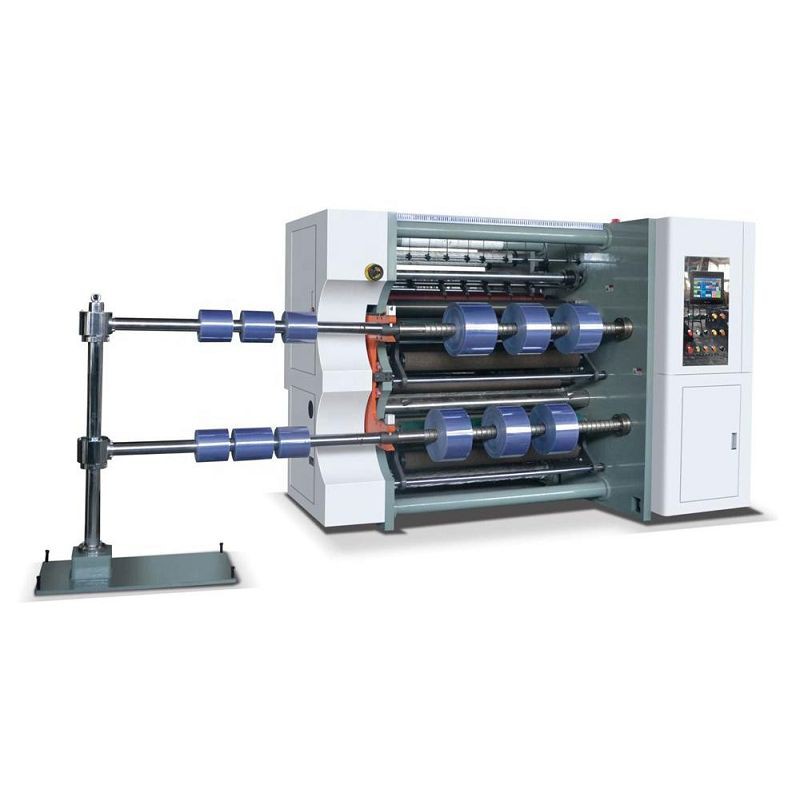

First off, what exactly is a slitting and rewinding machine? Well, it's a device that cuts large rolls of material, like paper, film, or foil, into narrower strips and then rewinds them onto smaller cores. These machines are used in a wide range of industries, from packaging to printing, and they come in various sizes and configurations. You can check out our Slitting and Rewinding Machine for more details on the types we offer.
Now, let's talk about the factors that affect the power consumption of a slitting and rewinding machine. The first and most obvious factor is the size and capacity of the machine. Larger machines with higher throughput generally require more power to operate. This is because they need to drive bigger motors and handle heavier loads. For example, a high-speed industrial slitting and rewinding machine used in a large-scale manufacturing plant will consume more power than a smaller, desktop model used in a small workshop.
Another important factor is the type of materials being processed. Different materials have different physical properties, such as thickness, density, and hardness, which can affect the amount of power needed to cut and rewind them. For instance, cutting through thick, heavy-duty paper or plastic film will require more power than cutting through thin, lightweight materials. Additionally, some materials may require special cutting techniques or additional processing steps, which can also increase power consumption.
The speed at which the machine operates is also a significant factor. Faster machines generally consume more power because they need to drive the motors at higher speeds to achieve the desired throughput. However, it's important to note that operating the machine at a higher speed doesn't always result in a proportional increase in power consumption. In some cases, the efficiency of the machine may actually improve at higher speeds, resulting in a more efficient use of power.
The design and technology of the machine also play a role in its power consumption. Modern slitting and rewinding machines are often equipped with advanced features and technologies that are designed to reduce power consumption and improve energy efficiency. For example, some machines use variable frequency drives (VFDs) to control the speed of the motors, which can help to reduce power consumption by adjusting the motor speed to match the load. Other machines may use energy-efficient motors or incorporate regenerative braking systems to recover and reuse energy.
So, how can you estimate the power consumption of a slitting and rewinding machine? The easiest way is to look at the machine's specifications. Most manufacturers will provide information on the power requirements of their machines, including the rated power consumption and the maximum power consumption. This information can give you a good idea of how much power the machine will consume under normal operating conditions.
However, it's important to note that the actual power consumption of a machine may vary depending on a number of factors, such as the specific operating conditions, the materials being processed, and the speed at which the machine is operating. To get a more accurate estimate of the power consumption, it's a good idea to conduct a power consumption test on the machine. This can be done by measuring the power consumption of the machine over a period of time under different operating conditions and calculating the average power consumption.
In addition to estimating the power consumption of the machine, it's also important to consider the overall energy efficiency of the machine. Energy-efficient machines not only consume less power, but they also help to reduce operating costs and environmental impact. When choosing a slitting and rewinding machine, look for machines that are designed to be energy-efficient and that incorporate advanced features and technologies to reduce power consumption.
At our company, we offer a range of Roll To Roll Cutting Machine and Surface Slitter Rewinder that are designed to be energy-efficient and to provide high-quality performance. Our machines are equipped with advanced features and technologies, such as VFDs and energy-efficient motors, to help reduce power consumption and improve energy efficiency.
In conclusion, the power consumption of a slitting and rewinding machine depends on a number of factors, including the size and capacity of the machine, the type of materials being processed, the speed at which the machine operates, and the design and technology of the machine. By understanding these factors and taking steps to optimize the operation of the machine, you can reduce power consumption and improve energy efficiency.
If you're in the market for a slitting and rewinding machine and have questions about power consumption or any other aspect of our products, don't hesitate to reach out. We're here to help you find the right machine for your needs and to provide you with the support and guidance you need to make an informed decision.
References
- General knowledge of slitting and rewinding machine technology and power consumption principles.
- Industry standards and best practices for energy efficiency in manufacturing equipment.


