

In the manufacturing industry, roll slitter rewinders play a crucial role in converting large rolls of materials such as paper, film, foil, and non - woven fabrics into smaller, more manageable rolls. As a trusted Roll Slitter Rewinder supplier, I have witnessed firsthand the importance of various components in the proper functioning of these machines. One such critical component is torque control, which significantly impacts the performance, quality, and efficiency of the slitting and rewinding process.
Understanding Torque in a Roll Slitter Rewinder
Torque is essentially the rotational force that causes an object to rotate around an axis. In the context of a roll slitter rewinder, torque is applied to the unwind and rewind shafts. The unwind shaft holds the large master roll, and the rewind shafts are responsible for taking up the slit material into smaller rolls.
Proper torque control ensures that the material is fed from the unwind roll at a consistent rate and wound onto the rewind rolls without issues such as slack, wrinkles, or excessive tension. If the torque is too low, the material may not be fed smoothly, leading to sagging and uneven slitting. On the other hand, if the torque is too high, it can cause the material to stretch, tear, or even damage the machine components.
Role in Unwinding Process
The unwind process is the first step in the slitting and rewinding operation. A Roll Slitter Rewinder needs to maintain a constant tension on the material as it is being unwound from the master roll. Torque control is essential here to counteract the changing diameter of the master roll. As the roll unwinds, its diameter decreases, which would normally cause a change in the rotational speed and tension of the material if not properly controlled.
By adjusting the torque applied to the unwind shaft, the machine can ensure a consistent linear speed of the material. This is achieved through a feedback control system that monitors the tension of the material and adjusts the torque accordingly. For example, as the diameter of the master roll decreases, the torque is increased to maintain the same pulling force on the material. This results in a smooth and continuous feed of the material to the slitting section, reducing the risk of material breakage and improving the overall quality of the slitting process.
Role in Rewinding Process
The rewinding process is equally important as the unwinding process. Here, the torque control determines how tightly the slit material is wound onto the rewind cores. Different applications require different winding tensions. For instance, in the production of paper rolls for printing, a uniform and moderate winding tension is required to ensure that the paper can be fed smoothly through the printing press without any jams.
Torque control on the rewind shafts allows for precise adjustment of the winding tension. As the diameter of the rewind roll increases, the torque can be adjusted to maintain a constant tension. This is particularly important when dealing with materials that are sensitive to tension changes, such as thin films or delicate fabrics. If the winding tension is not properly controlled, it can lead to issues like telescoping (where the layers of the roll are misaligned), tight or loose winding, and poor roll quality.
Impact on Slitting Quality
The quality of the slitting process is directly affected by the torque control. A well - controlled torque ensures that the material is fed and wound evenly, which in turn leads to accurate and clean slitting. When the tension is consistent throughout the process, the slitting blades can cut through the material more precisely, resulting in straight edges and uniform widths of the slit rolls.
In addition, proper torque control reduces the vibration and movement of the material during slitting. This is crucial because excessive vibration can cause the slitting blades to wear out faster and can also lead to uneven cuts. By maintaining a stable tension, the machine can operate more smoothly, extending the lifespan of the slitting blades and improving the overall slitting quality.
Role in Machine Efficiency
Torque control also plays a significant role in the efficiency of the Roll Slitter Rewinder. By ensuring a smooth and continuous operation, it reduces the downtime caused by material jams, breakages, and rework. When the torque is properly adjusted, the machine can run at its optimal speed, increasing the production output.
Moreover, accurate torque control allows for faster changeovers between different materials and roll sizes. Since the tension can be quickly adjusted to suit the new requirements, the machine can be set up for the next production run more efficiently. This flexibility is essential in a manufacturing environment where quick response to changing customer demands is crucial.
Integration with Advanced Technologies
Modern Roll Slitter Rewinders are often equipped with advanced control systems that integrate torque control with other functions. For example, some machines use servo motors for torque control, which offer high precision and fast response times. These servo motors can be programmed to adjust the torque based on specific production parameters, such as material type, roll diameter, and desired tension.
In addition, the integration of torque control with sensors and automation technologies allows for real - time monitoring and adjustment of the slitting and rewinding process. Sensors can detect changes in tension, speed, and other parameters, and the control system can automatically adjust the torque to maintain optimal operating conditions. This not only improves the quality and efficiency of the machine but also reduces the need for manual intervention.
Conclusion
Torque control is an indispensable part of a Roll Slitter Rewinder. Its role in the unwinding, rewinding, slitting, and overall machine operation cannot be overstated. As a Roll Slitter Rewinder supplier, we understand the importance of providing machines with precise torque control systems. Our Slitting and Rewinding Machine, Jumbo Roll Slitting Machine, and High Speed Slitting Machine are designed to offer accurate and reliable torque control, ensuring high - quality production and efficient operation.
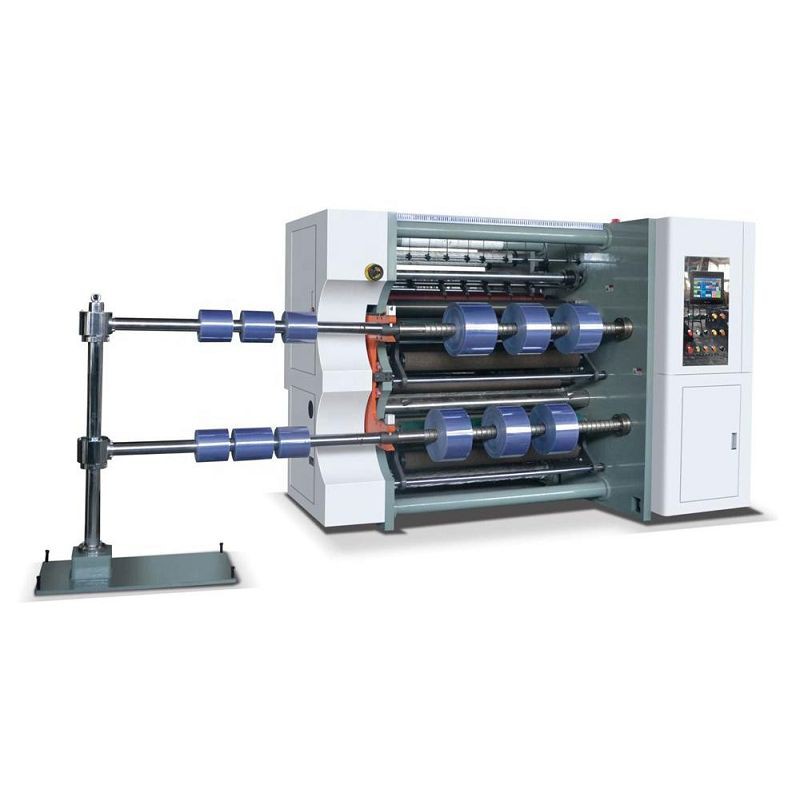

If you are in the market for a Roll Slitter Rewinder, we invite you to contact us for a detailed discussion about your specific requirements. Our team of experts can provide you with the best solutions tailored to your needs and help you achieve optimal results in your slitting and rewinding operations.
References
- "Slitting and Rewinding Technology Handbook", Industrial Press Inc.
- "Advanced Control Strategies for Roll - to - Roll Manufacturing Processes", John Wiley & Sons


